





Blog
How to Export African Products to International Markets ?

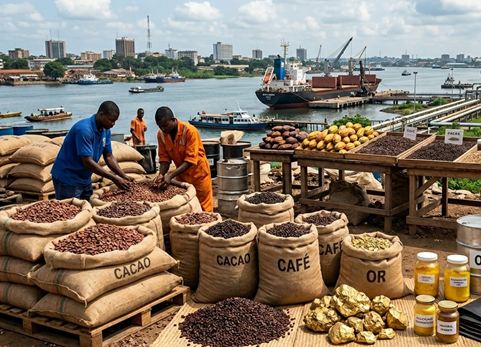
Africa holds an exceptional wealth of agricultural, food, artisanal, and cultural products. From cocoa and coffee to ginger, pepper, chili, turmeric, tropical fruits, nuts, cassava, and a wide range of processed goods, export opportunities are abundant.
Today, consumers and businesses around the world are increasingly seeking authentic, natural, organic, traceable products sourced from new production regions. This shift represents a real opportunity for African producers, cooperatives, processors, and companies.
However, exporting a product to an international market is not as simple as buying goods, loading them into a container, and shipping them abroad.
A successful export operation requires careful preparation: understanding the target market, identifying the right buyers, meeting regulatory requirements, organizing packaging, managing logistics, and ensuring smooth shipment execution.
In this article, discover the key steps to successfully export African products to international markets.
1. Identify a Product With Export Potential
The first step is to determine which product you want to export and, more importantly, whether there is genuine international demand for it.
Africa produces a wide range of goods that appeal to importers, distributors, manufacturers, and consumers around the world.
Key product categories include:
Agricultural products
- Cocoa
- Coffee
- Ginger
- Turmeric
- Chili pepper
- Black pepper
- Tropical fruits
- Dried fruits
- Nuts
- Honey
- Plants and natural products
- Cassava-based products
Processed food products
- Packaged spices
- Flours
- Condiments
- Ready-to-eat food products
- Traditional processed foods
- Fruit and vegetable derivatives
Artisanal and cultural products
- Textiles
- Decorative items
- Handicrafts
- Accessories
- African cultural products
Before getting started, it’s important to answer a few key questions:
- Who will buy this product?
- In which countries is there demand?
- What is the prevailing market price?
- What volumes can realistically be sold?
- Who are the competitors?
- Can the product be supplied consistently?
- Can it be transported easily?
- Are there specific restrictions in the destination country?
A good export product isn’t simply one that’s available locally — it’s one capable of meeting real, sustained commercial demand.
2. Research the Market Before You Begin Exporting
A common mistake is producing or purchasing large quantities of goods before identifying any buyers at all.
Before starting any operation, it’s advisable to conduct thorough research on the target market.
For instance, an African product may be in high demand in Europe, yet subject to strict standards around:
- food safety
- chemical residues
- labeling
- packaging
- traceability
- health certificates
- product origin
Requirements can also differ significantly between the United States, Canada, Europe, Asia, and the Middle East.
The goal is to understand precisely what each market requires.
A company looking to export ginger, cocoa, or pepper needs to know:
- which varieties are in demand
- the expected quality standards
- the required formats
- typical order volumes
- packaging conditions
- necessary documentation
This groundwork helps avoid investing in goods that don’t match international buyers’ expectations.
3. Ensure Quality and Supply Consistency
In international trade, quality is essential.
A buyer may agree to test a new supplier with a small order — but building a lasting business relationship requires the supplier to maintain consistent quality over time.
This involves:
- rigorous product selection
- quality control
- proper preservation
- suitable storage
- product traceability
- reliable, ongoing supply capacity
For example, an importer ordering several tons of cocoa, coffee, or ginger needs assurance that future deliveries will meet the same specifications.
That’s why it’s important to work with:
- reliable producers
- cooperatives
- consistent suppliers
- partners capable of meeting required volumes
The ability to supply a product consistently can matter just as much as the quality of the product itself.
4. Adapt Your Product to International Market Requirements
A product designed for the local market often can’t be exported in its original packaging.
International markets may impose requirements on:
- weight
- packaging dimensions
- materials used
- labeling
- languages featured on the product
- nutritional information
- production and expiry dates
- product origin
- storage conditions
Packaging also plays a key commercial role. Even a high-quality African product can struggle to attract distributors or international consumers if its presentation doesn’t meet the target market’s standards.
That’s why it’s worth investing in:
Packaging — the product must be properly protected during transport and storage.
Commercial packaging design — it should present the product professionally and attractively.
Labeling — information must be clear and compliant with the destination country’s requirements.
Branding — a strong brand helps differentiate the product and build a recognizable identity in international markets.
5. Prepare the Necessary Export Documentation
Any international operation generally requires a set of commercial, administrative, and logistics documents.
Depending on the product type and destination country, an export shipment may require:
- a commercial invoice
- a packing list
- an export declaration
- a certificate of origin
- health or phytosanitary certificates
- quality certificates
- transport documents
- customs documents
Requirements vary depending on the nature of the goods and the destination country, so it’s essential to get informed well ahead of shipment.
Incorrect or incomplete documentation can lead to:
- delays
- extra costs
- customs holds
- or even rejection of the goods
Professional support can help secure operations and reduce these risks.
6. Find International Buyers
Once your product is ready, the key question becomes: how do you find buyers abroad?
Potential buyers include:
- importers
- wholesalers
- distributors
- retail chains
- food and agribusiness companies
- restaurants
- manufacturers
- distribution platforms
To attract these buyers, a professional presentation is essential. Ideally, your company should have:
- a professional website
- a product catalog
- high-quality photography
- technical data sheets
- a clear presentation of your supply capacity
- information on product origin
- professional contact details
International buyers need to be able to quickly understand:
- Who are you?
- What products do you offer?
- What quantities can you supply?
- What is the product quality?
- Under what conditions can you deliver?
Trust is fundamental in international trade. A well-presented company will generally find it easier to build relationships with foreign partners.
7. Choose the Right Mode of Transport
The choice of transport depends mainly on:
- the type of product
- the volume
- the weight
- the delivery timeline
- the available budget
- the destination
Sea freight is particularly well suited to large volumes — bulk goods, agricultural products, packaged goods, and large orders. It generally allows large quantities to be shipped over long distances cost-effectively.
Air freight suits products requiring fast delivery — small volumes, high-value products, certain perishable goods, and urgent orders. However, it tends to cost more than sea freight.
Road transport typically moves goods from the production site to the port, to an airport, to a warehouse, or to the final customer.
International shipments often combine several modes of transport.
8. Understand Your Export Costs
To be profitable, an export operation must be calculated with precision.
The final cost can include:
- purchase or production price
- packaging
- packing materials
- storage
- local transport
- administrative fees
- customs fees
- international freight
- insurance
- any applicable commissions
It’s essential to know the real cost of your goods before quoting a price to a buyer. A price that’s too low reduces your profitability; a price that’s too high makes your offer less competitive.
A sound commercial strategy involves analyzing all costs to build a clear, market-appropriate offer.
9. Negotiate Effectively With International Buyers
Negotiation is a critical step in B2B trade.
Before finalizing an agreement, several elements should be clearly defined:
- the product
- quality
- quantity
- price
- packaging
- production timeline
- delivery conditions
- payment terms
It’s advisable to formalize the key terms of the agreement to avoid misunderstandings. In any international relationship, clear, professional communication is essential — both parties need a precise understanding of their responsibilities and the terms of the operation.
10. Organize Customs Clearance and Shipping
Once the goods are ready and the sale is finalized, it’s time to organize departure. This stage typically includes:
- preparing the goods
- packaging
- transport to the port or airport
- administrative formalities
- customs clearance
- loading
- international transport
- shipment tracking
Managing these steps can be complex, especially for a company new to international trade. That’s why many companies partner with specialists in freight forwarding, international transport, customs clearance, and logistics.
Common Mistakes to Avoid
To succeed in exporting, avoid these common pitfalls:
Skipping market research. Having a product available doesn’t guarantee international demand for it.
Neglecting quality. A single quality issue can jeopardize an entire business relationship.
Underestimating costs. Every expense must be calculated before setting a price.
Ignoring regulatory requirements. Every market has its own rules.
Accepting orders beyond your capacity. It’s better to start with a manageable volume than to accept an order you can’t fulfill.
Operating without clear documentation. Commercial and logistics documents must be prepared with precision.
How SLS GLOBAL Supports Companies and International Buyers
At SLS GLOBAL, our mission is to build lasting trade connections between Africa and global markets.
We support businesses and buyers who want to:
- source African products
- connect with producers and suppliers
- purchase African raw materials
- organize import-export operations
- find products internationally
- manage the transport of their goods
Our approach connects the key players across the trade chain:
African Producers → SLS GLOBAL → Importers and International Markets
We also operate in sourcing and logistics to offer a more complete approach to international trade.
Our goal is simple: to facilitate the flow of products, opportunities, and trade between Africa and the rest of the world.
Conclusion: Exporting Means Building a Bridge Between Markets
Exporting African products represents a major opportunity for producers, businesses, and African economies.
But succeeding internationally takes more than a good product. It requires understanding buyers’ needs, guaranteeing quality, meeting market requirements, organizing efficient logistics, and building trust-based business relationships.
With the right preparation and the right partners, African products can reach new markets and meet growing global demand.
SLS GLOBAL supports this ambition by helping connect African producers, businesses, importers, and consumers around the world.
Looking to source African products or export your own production?
SLS GLOBAL can support your sourcing, import-export, and logistics projects. Contact our team to discuss your needs and get a solution tailored to your project.
SLS GLOBAL — Connecting Africa to the World.