





Blog
From African Farm to Global Market: The Role of a Trusted Logistics Partner

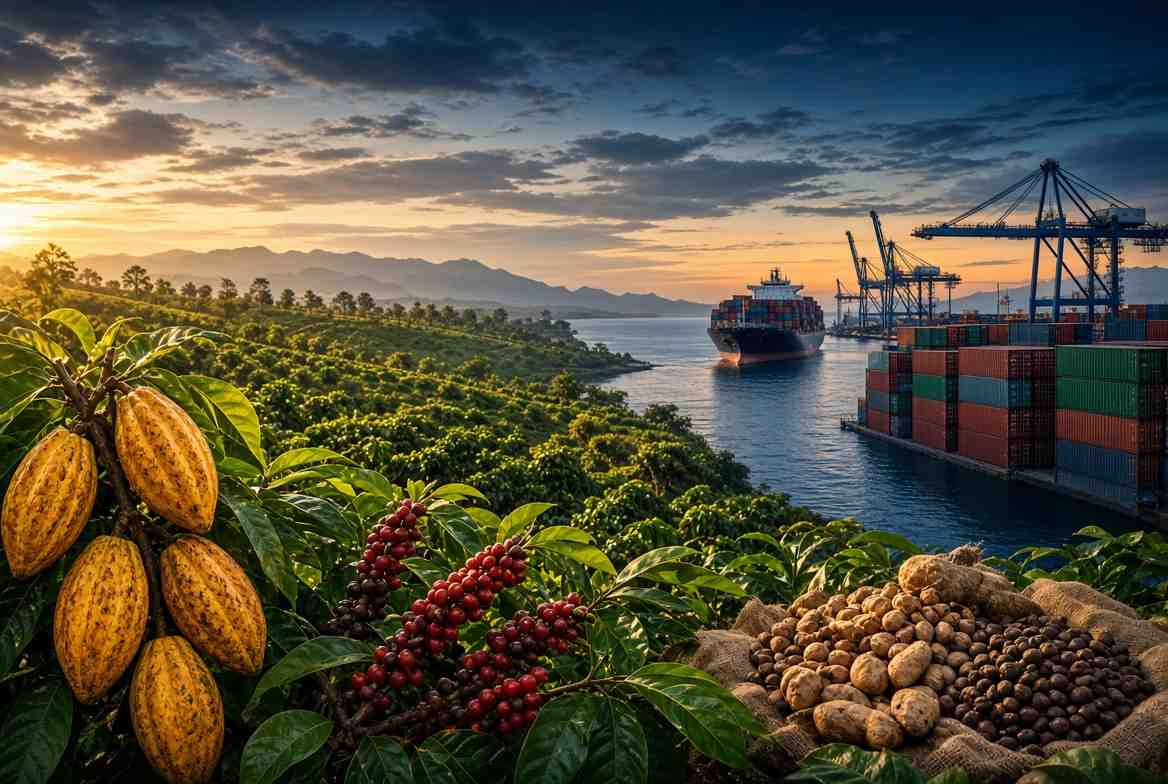
Exporting African agricultural products to international markets involves much more than finding a buyer. From the farm to the destination port, a complex supply chain involving transportation, packaging, quality control, documentation, customs clearance, and coordination must operate smoothly.
This is where the role of a trusted logistics partner becomes essential.
In 2026, international buyers expect more than high-quality products. They also demand reliability, traceability, regulatory compliance, and on-time delivery. For African producers and exporters, working with a reliable logistics partner can make the difference between a one-time business opportunity and sustainable access to global markets.
This article explores the journey of African agricultural products from the farm to international markets, the main logistics challenges involved, and the concrete role a trusted logistics partner can play in successful African exports.
1. The Journey of an African Product: From Farm to Global Market
The journey of an African agricultural or processed food product to an importer in Europe, North America, Asia, or another international market involves several critical stages:
- Production and harvesting by farmers, producers, or cooperatives
- Collection and consolidation of products and volumes
- Sorting, cleaning, processing, and packaging according to export requirements
- Quality control and testing when required
- Storage under appropriate conditions
- Domestic transportation to the port or airport
- Export documentation and customs formalities
- International transportation, including sea freight, air freight, or multimodal solutions
- Customs clearance in the destination country
- Final delivery to the importer, distributor, manufacturer, or end customer
Every stage comes with potential risks, including quality deterioration, delays, damaged goods, documentation errors, unexpected costs, and customs issues.
An experienced African export logistics partner helps secure and coordinate this entire supply chain, ensuring that products move efficiently from their origin to their final destination.
2. Key Logistics Challenges in African Agricultural Exports
Africa has enormous potential in the global agricultural and food export market, with products such as cocoa, coffee, spices, ginger, turmeric, peppers, cassava, dried fruits, nuts, and other agricultural commodities increasingly attracting international buyers.
However, several challenges can still affect the ability of African suppliers to access and serve global markets.
Quality and Packaging
A high-quality agricultural product can lose significant value if it is poorly sorted, inadequately dried, improperly handled, or packaged without considering international transportation and storage requirements.
Proper packaging protects products against moisture, contamination, physical damage, and other risks throughout the supply chain.
Documentation and Regulatory Compliance
International exports require accurate documentation and compliance with the regulations of the destination market.
Depending on the product and destination, this may include:
- Certificates of origin
- Phytosanitary certificates
- Commercial invoices
- Packing lists
- Export permits
- Quality certificates
- Customs documentation
- Product-specific regulatory requirements
Even a minor documentation error can delay or block a shipment.
For exporters targeting demanding markets such as the European Union, understanding and meeting applicable import requirements is particularly important.
Transportation and Delivery Times
Choosing between air freight and sea freight depends on several factors, including:
- Product characteristics
- Shipment volume
- Urgency
- Destination
- Budget
- Required transit time
Container availability, port operations, transit times, inland transportation, and coordination between multiple service providers also require specialized logistics expertise.
Costs and Transparency
Without proper coordination, exporters may have to deal with multiple intermediaries, making it difficult to understand the actual logistics costs and who is responsible for each stage of the shipment.
A reliable logistics partner can provide greater visibility and help exporters plan their logistics budgets more effectively.
Traceability
International buyers increasingly want to know where products come from and how they were handled throughout the supply chain.
Traceability in agricultural exports helps strengthen buyer confidence, improve supply-chain visibility, and support compliance with applicable market requirements.
These challenges demonstrate why a trusted logistics partner for African exports can provide significant value.
3. The Role of a Trusted Logistics Partner
A trusted logistics partner does much more than simply transport goods.
The right partner helps structure, coordinate, secure, and optimize the journey of African products from the farm to the global market.
a) End-to-End Logistics Coordination
A logistics partner can act as the coordinator of the entire operation, managing activities such as:
- Product collection
- Packaging and preparation
- Warehousing and storage
- Inland transportation
- Export documentation
- Customs procedures
- International freight
- Shipment tracking
- Final delivery coordination
Instead of managing a fragmented network of service providers, the exporter can work with a central logistics partner responsible for coordinating the different stages.
b) Multimodal Transportation Expertise
Different products and destinations require different transportation solutions.
Depending on the shipment, an experienced logistics partner can recommend:
- Sea freight for large volumes and cost-efficient international transportation
- Air freight for urgent, sensitive, or high-value products
- Multimodal transportation combining road, sea, rail, or air depending on the route
Choosing the appropriate transportation method can have a significant impact on delivery times, costs, and product condition.
c) Export Documentation and Customs Clearance
Preparing export documents correctly and complying with destination-country requirements can significantly reduce the risk of delays, additional costs, rejected shipments, or customs problems.
A knowledgeable logistics partner can support exporters throughout the documentation and customs clearance process.
d) Protecting Product Quality
Agricultural and food products often have specific requirements concerning:
- Temperature
- Humidity
- Ventilation
- Packaging
- Handling
- Storage duration
- Transportation conditions
A logistics provider familiar with agricultural exports can help ensure that these requirements are considered throughout the supply chain.
e) Shipment Tracking and Communication
International trade requires clear communication.
Shipment tracking, regular updates, and transparent communication allow both exporters and importers to monitor the progress of their cargo and respond quickly if an issue occurs.
For international buyers, this level of visibility can significantly increase confidence in an African supplier.
4. Logistics Services That Make a Difference
Successful international exports of African products depend on a well-organized logistics chain.
The following services can be particularly valuable:
| Logistics Service | Value for African Exports |
|---|---|
| International Transportation | Access to European, American, Asian, and other global markets |
| Air Freight | Suitable for urgent, sensitive, or high-value products |
| Sea Freight | Cost-effective solution for large volumes such as cocoa, coffee, and spices |
| Warehousing and Transit | Product consolidation and secure storage before shipment |
| Customs Clearance | Smoother border procedures and regulatory compliance |
| Import-Export Support | Documentation assistance and logistics coordination |
| Supply Chain Management | Better visibility and reduced supply-chain disruptions |
| Shipment Tracking | Improved visibility and communication throughout transportation |
A logistics partner capable of coordinating several of these services can provide a significant competitive advantage to African exporters and international buyers.
5. Benefits for African Producers and Exporters
Working with a trusted logistics partner can help African producers and exporters:
- Reach international buyers more easily
- Reduce losses related to transportation and storage
- Improve documentation and regulatory compliance
- Improve delivery reliability
- Better manage logistics costs
- Negotiate with greater confidence thanks to a more reliable supply chain
- Focus on production and business development rather than complex logistics operations
- Build long-term relationships with international importers
In other words, logistics is no longer simply an operational expense.
It is a strategic tool for competitiveness and international growth.
6. Benefits for International Importers
International buyers, including importers, distributors, wholesalers, and manufacturers, can also benefit from having a reliable logistics partner on the African side of the supply chain.
Key advantages include:
Greater Delivery Reliability
Professional logistics coordination can help improve the consistency and predictability of shipments.
Better Visibility
Importers can receive clearer information about shipment status, documentation, transportation, and expected delivery dates.
Reduced Supply Chain Risks
Proper coordination can reduce the risk of documentation problems, transportation delays, cargo handling issues, and other disruptions.
Faster Problem Resolution
When an issue occurs, having a dedicated logistics partner provides a clear point of contact for coordination and problem-solving.
Stronger Supplier Relationships
A reliable logistics operation can strengthen the credibility of African suppliers and contribute to long-term commercial relationships.
For international buyers looking to source products from Africa, logistics reliability can therefore be an important factor when evaluating potential suppliers.
7. How to Choose a Trusted Logistics Partner for African Exports
Choosing the right logistics partner is an important strategic decision.
Before working with a logistics provider, consider the following criteria:
1. Experience in African Agricultural Exports
Look for a partner who understands the specific characteristics of agricultural and food products sourced from Africa.
2. Comprehensive Logistics Services
A strong partner should be able to coordinate several stages of the supply chain, including transportation, storage, documentation, customs, and shipment tracking.
3. International Network
The ability to manage shipments to multiple international destinations is a major advantage for exporters seeking to expand their markets.
4. Cost Transparency
Your logistics partner should clearly explain transportation costs, customs-related charges, handling fees, storage costs, and other potential expenses.
5. Communication and Responsiveness
International logistics requires fast communication. Choose a partner who provides timely updates and responds quickly when issues arise.
6. Export Knowledge and References
Experience with export procedures, international standards, and previous shipments can provide valuable reassurance.
7. End-to-End Approach
The best partner understands the complete journey:
Farm or factory → Collection → Packaging → Storage → Inland Transport → Customs → International Freight → Destination → Final Delivery
A partner who understands both the realities of African supply chains and the requirements of international markets can become a valuable long-term business partner.
8. SLS GLOBAL: Connecting Africa to the World
At SLS GLOBAL, we support producers, exporters, importers, and international businesses throughout the African-to-global supply chain.
Our services cover key areas including:
- Product sourcing
- Product selection and preparation
- Packaging coordination
- International logistics
- Inland transportation
- Warehousing and storage
- Transit services
- Air freight
- Sea freight
- Import and export support
- Customs clearance
- Supply-chain coordination
Our objective is simple:
To make it easier and more reliable to move African products from the farm to international markets.
Whether you are:
- An African producer or exporter looking to reach international buyers,
- An international importer searching for reliable African suppliers,
- A distributor or wholesaler looking for consistent product sourcing,
SLS GLOBAL can help coordinate the commercial and logistics aspects of your international sourcing and supply chain.
Africa Connected to the World.
Conclusion: Logistics Is a Strategic Advantage for African Exports
The success of African agricultural exports does not depend solely on the quality of the harvest.
It increasingly depends on the quality, reliability, and efficiency of the logistics chain connecting the producer to the global market.
A trusted logistics partner can help secure shipments, reduce risks, improve compliance, increase supply-chain visibility, and strengthen the credibility of African exporters among international buyers.
As global trade becomes increasingly demanding and competitive, professional African export logistics is no longer simply a support function.
It is a strategic competitive advantage.
If you are looking to export African agricultural products internationally or source reliable products from Africa, having the right logistics and sourcing partner can make the entire process more efficient and predictable.
Ready to connect African products with global markets? Contact SLS GLOBAL to discuss your sourcing, export, and international logistics requirements.
SEO Title
African Export Logistics: From Farm to Global Market | SLS GLOBAL
Meta Description
Discover how trusted logistics partners help African exporters move agricultural products from the farm to global markets through sourcing, freight, customs, storage, and supply-chain coordination.
Suggested URL Slug
/african-export-logistics-farm-to-global-market/
Primary SEO Keyword
African export logistics
Secondary Keywords
- African agricultural exports
- African products export
- export logistics Africa
- international logistics Africa
- African suppliers
- sourcing products from Africa
- African agricultural products
- African food exports
- sea freight Africa
- air freight Africa
- African supply chain
- logistics partner Africa
- international trade Africa
- customs clearance Africa
- African products to global markets
SLS GLOBAL – Connecting Africa to the World contact@sounkeglobal.com | infos@ssounkeglobal.com